Back pain is a common problem that can affect how you work, exercise, sleep, and move through everyday life. Long hours at a desk, poor posture, limited physical activity, muscle weakness, repetitive movements, and other factors can contribute to discomfort in the back.
For people looking for a controlled and low-impact form of exercise, Pilates for Back Pain can be an option worth exploring. Pilates focuses on core strength, controlled movement, body awareness, breathing, alignment, flexibility, and mobility. These principles can help people develop better movement habits and build strength that supports everyday activities.
However, Pilates is not a substitute for medical diagnosis or treatment. If you have severe, persistent, or unexplained back pain, it is important to seek advice from a qualified healthcare professional before starting an exercise programme.
What Is Pilates for Back Pain?
Pilates for Back Pain refers to using appropriately selected Pilates exercises to improve strength, mobility, movement control, and body awareness in people experiencing back discomfort.
Rather than focusing on high-impact movements, Pilates uses controlled exercises that can be modified according to an individual’s ability and fitness level.
A Pilates session may include movements designed to work the:
- Deep abdominal muscles
- Glutes
- Hip muscles
- Back muscles
- Pelvic floor
- Shoulders and upper back
- Spine and surrounding muscles
The goal is not simply to strengthen the back itself. A balanced Pilates programme can work several areas of the body that contribute to efficient movement and postural control.
Can Pilates Help With Back Pain?
Pilates may help some people manage back discomfort by improving core strength, flexibility, movement control, and physical function.
One reason Pilates is often considered for back care is its emphasis on controlled movement and alignment. Strengthening the muscles around the trunk and hips may help support better movement patterns during daily activities.
However, the effectiveness of Pilates can vary depending on the cause and type of back pain.
For example, someone experiencing occasional muscular discomfort from prolonged sitting may have very different needs from someone with a diagnosed spinal condition or acute injury.
That is why exercises should be selected according to individual needs rather than following a generic routine without guidance.
How Does Pilates Support a Stronger Back?
A strong back does not depend only on the back muscles.
The trunk functions as an interconnected system involving the abdominal muscles, back muscles, hips, pelvis, and other supporting muscles.
Pilates can help develop this system through exercises that emphasise:
Core Stability
Core muscles help stabilise the trunk during movement. Developing better core control can make everyday movements such as bending, lifting, walking, and changing positions more coordinated.
Postural Awareness
Pilates encourages awareness of body alignment. Learning how your pelvis, spine, shoulders, and head are positioned can help you recognise inefficient movement habits.
Mobility
Some Pilates exercises involve controlled movement through the hips and spine. Maintaining appropriate mobility can support comfortable movement during daily activities.
Muscle Balance
Pilates can target multiple muscle groups rather than repeatedly loading a single area. This can help develop more balanced movement patterns.
Body Awareness
Concentration is an important part of Pilates. Paying attention to breathing, alignment, and movement quality can help you understand how your body responds to different exercises.
7 Pilates Exercises That May Support Back Strength and Mobility
The following exercises are examples commonly associated with Pilates-based movement. The appropriate exercise, range of motion, repetitions, and intensity depend on the individual.
If an exercise causes pain or unusual symptoms, stop and seek professional guidance.
1. Pelvic Tilt
The pelvic tilt is a simple movement that introduces awareness of the pelvis and lower back.
Lie on your back with your knees bent and feet comfortably positioned on the floor. Gently engage your abdominal muscles and make a small controlled movement with your pelvis.
This exercise can help beginners understand neutral and controlled pelvic positioning.
Potential focus: pelvic awareness, core activation, and lower-back control.
2. Bridge
The Pilates bridge targets the glutes and muscles around the hips while requiring control through the pelvis and trunk.
Begin lying on your back with your knees bent. Engage your core and gradually lift the pelvis while maintaining control. Pause briefly before lowering back down.
The movement should be smooth rather than rushed.
Potential focus: glute strength, hip extension, pelvic control, and trunk stability.
3. Bird Dog
Bird dog is a functional movement that challenges balance and core stability.
Start on your hands and knees. While maintaining a stable trunk, extend one arm and the opposite leg as appropriate for your ability. Return to the starting position and repeat on the other side.
The objective is controlled movement rather than lifting the limbs as high as possible.
Potential focus: core stability, coordination, balance, and posture.
4. Cat-Cow Movement
This gentle movement involves controlled changes in spinal position.
Start on all fours and slowly move between comfortable spinal positions while coordinating the movement with your breathing.
The movement should remain within a comfortable range.
Potential focus: spinal mobility, body awareness, and controlled movement.
5. Dead Bug Variation
A Pilates-inspired dead bug variation can challenge core stability while moving the arms and legs.
Lie on your back and position your arms and legs as instructed by your Pilates instructor. Slowly move one limb while maintaining control through the trunk.
This exercise can be modified to suit beginners.
Potential focus: abdominal control, coordination, and trunk stability.
6. Spine Twist
Controlled rotational movements can encourage awareness of spinal movement and posture.
Sit or lie in an appropriate position and rotate through a comfortable range while maintaining control.
People with specific spinal conditions should seek professional guidance before performing rotational exercises.
Potential focus: mobility, posture, and controlled rotation.
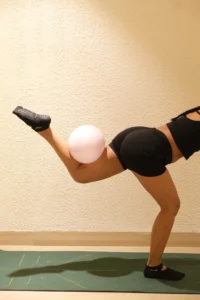
7. Glute-Focused Leg Exercises
Weakness or reduced activation around the hips can affect movement patterns. Pilates includes several controlled leg movements that target the glutes and hip muscles.
These may include side-lying leg lifts and other appropriately modified exercises.
Potential focus: hip strength, pelvic stability, and lower-body control.
Pilates for Lower Back Pain
Lower back discomfort is one of the most common reasons people explore Pilates.
A Pilates programme for lower back concerns may focus on improving:
- Core control
- Hip mobility
- Glute strength
- Pelvic stability
- Movement coordination
- Postural awareness
The important point is that there is no single Pilates exercise that works for every type of lower back pain.
Exercises should be adapted according to the individual’s symptoms, physical ability, movement patterns, and professional recommendations when necessary.
Pilates for Upper Back and Neck-Related Postural Problems
Back discomfort is not limited to the lower back.
People who spend several hours working on computers or using mobile devices may develop stiffness around the upper back, shoulders, and neck.
Pilates can incorporate exercises that focus on:
- Upper-back mobility
- Shoulder movement
- Scapular control
- Core stability
- Head and neck alignment
- Breathing patterns
Improving awareness of how you sit and move can complement an active lifestyle.
For office workers, Pilates can be particularly useful as part of a broader routine that includes regular movement breaks, appropriate workstation setup, walking, and strength training.
How Pilates Can Improve Posture
Good posture is not simply about sitting or standing perfectly straight all day.
Healthy movement involves being able to change positions, maintain balance, and control the body efficiently.
Pilates can encourage postural awareness by focusing on:
Alignment: Understanding how different parts of the body relate to one another.
Core control: Developing better control of the muscles surrounding the trunk.
Shoulder positioning: Learning to move and stabilise the shoulders effectively.
Pelvic awareness: Understanding how pelvic position can influence movement.
Breathing: Coordinating breathing with controlled movement.
Over time, these skills may help you become more aware of your posture during everyday activities.
Is Pilates Low Impact?
Yes, Pilates is generally considered a low-impact form of exercise because it does not typically involve repetitive jumping or high-impact landings.
This makes it appealing to people who prefer controlled movement.
However, low impact does not mean that every Pilates exercise is suitable for everyone. Some exercises can still be challenging, particularly when performed on specialised equipment such as a Reformer.
A qualified instructor can modify exercises by changing the range of motion, resistance, repetitions, positioning, or level of difficulty.
Reformer Pilates for Back Pain
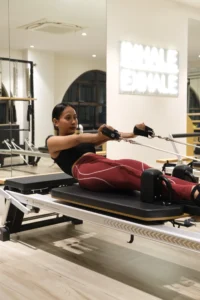
Reformer Pilates uses a specialised piece of equipment with a moving carriage, springs, straps, and other components.
The equipment can provide both resistance and assistance, allowing exercises to be progressed or modified.
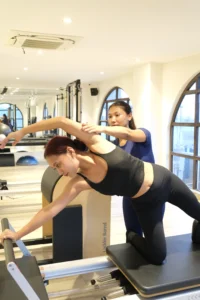
For someone interested in Reformer Pilates for back pain, professional instruction is especially valuable. The instructor can observe movement technique and determine whether an exercise should be modified.
Reformer Pilates should not be viewed as a guaranteed treatment for back pain. Its role is better understood as a structured form of movement and exercise that may support strength, mobility, and body awareness when appropriately prescribed.
How Often Should You Do Pilates for Back Pain?
There is no universal number of sessions that everyone with back pain should complete.
For many healthy adults, practising Pilates two to three times per week can be a practical routine. Beginners may start with fewer sessions and gradually increase their frequency depending on how their body responds.
Consistency is generally more useful than trying to do too much too quickly.
A sustainable programme may include:
- Guided Pilates sessions
- Walking or other suitable cardiovascular activity
- Strength training when appropriate
- Mobility exercises
- Regular movement breaks
- Adequate recovery
Your routine should be adjusted according to your goals and individual needs.
Tips for Doing Pilates Safely
If you are considering Pilates for back discomfort, keep these principles in mind:
Start Gradually
Do not begin with advanced exercises simply because they look easy or popular online.
Focus on Technique
Controlled movement is one of the foundations of Pilates. Quality is more important than rushing through repetitions.
Communicate With Your Instructor
Tell your instructor about existing pain, injuries, limitations, or previous diagnoses before starting a session.
Avoid Working Through Sharp Pain
Muscle effort and mild exercise-related fatigue are different from sharp, severe, or worsening pain.
Progress Slowly
Increase resistance, repetitions, range of motion, or exercise complexity gradually.
Combine Exercise With Healthy Movement Habits
Even an excellent Pilates programme cannot compensate for spending the entire day without moving. Regular walking and movement breaks can complement your exercise routine.
When Should You Avoid Exercising and Seek Professional Advice?
Back pain can have many different causes, and exercise is not appropriate for every situation.
Seek medical advice if your back pain is severe, persistent, worsening, follows a significant injury, or is accompanied by symptoms such as numbness, weakness, or other concerning changes.
People who have recently undergone surgery or have a diagnosed spinal condition should also obtain appropriate professional guidance before beginning a new exercise programme.
Pilates instructors can guide exercise technique, but they do not replace doctors, physiotherapists, or other qualified healthcare professionals when medical assessment is required.
Why Professional Pilates Instruction Matters
Learning Pilates from a qualified instructor can make a significant difference, particularly if you are new to exercise or have specific movement concerns.
An instructor can help you understand:
- Correct positioning
- Breathing technique
- Appropriate resistance
- Exercise modifications
- Movement control
- Progression
- Safe exercise technique
At Ritual Centre in Guwahati, Pilates sessions are designed around controlled movement, strength, mobility, alignment, and body awareness. The studio offers different training formats, including group sessions, duet sessions, and personal training.
This allows individuals to choose a training format according to their preferences and goals.
Pilates for Back Pain: A Long-Term Approach to Better Movement
Managing back discomfort is not always about finding one exercise that provides an immediate solution.
A broader approach can involve becoming more active, developing strength, improving mobility, building better movement habits, and understanding your body’s needs.
Pilates for Back Pain can form part of that approach by combining controlled exercise with core stability, mobility, alignment, and body awareness.
Whether you are interested in mat Pilates or Reformer Pilates, the focus should remain on appropriate exercise selection, good technique, gradual progression, and consistency.
If you are searching for Pilates classes in Guwahati, choosing a professional studio with qualified instruction can help you begin your practice in a structured and informed way.
Frequently Asked Questions About Pilates for Back Pain
Is Pilates good for back pain?
Pilates may help some people with back discomfort by supporting core strength, mobility, movement control, and physical function. However, its suitability depends on the cause and severity of the pain.
Can Pilates reduce lower back pain?
Pilates may help some people manage lower back discomfort as part of an appropriate exercise programme. Exercises should be selected and modified according to individual needs.
Which Pilates exercises are best for back pain?
Exercises such as pelvic tilts, bridges, controlled core exercises, bird dog variations, and gentle mobility movements may be included in a Pilates programme. The best exercises depend on the individual’s condition and ability.
Can beginners do Pilates for back pain?
Beginners can participate in appropriately modified Pilates sessions. If you have existing back pain, inform your instructor before starting so exercises can be adapted appropriately.
How often should I do Pilates for back pain?
There is no universal frequency. Many people can incorporate Pilates two to three times per week, but beginners may start with less and gradually build their routine.
Is Reformer Pilates good for back pain?
Reformer Pilates can provide controlled resistance and adjustable exercises. It may be suitable for some people with back discomfort when exercises are appropriately selected and supervised.
Can Pilates improve posture?
Pilates can help develop awareness of alignment, core control, balance, and movement technique, which may support better postural habits.
Can Pilates make back pain worse?
Certain exercises may aggravate symptoms if they are inappropriate for an individual’s condition or performed with poor technique. Stop an exercise that causes significant or worsening pain and seek appropriate professional guidance.
Is Pilates better than yoga for back pain?
Pilates and yoga use different approaches and include many different exercises. Neither is universally better for every person with back pain. The appropriate choice depends on individual goals, symptoms, preferences, and professional guidance.
How long does it take for Pilates to help back pain?
There is no fixed timeline. Progress depends on factors such as the cause of the discomfort, exercise consistency, starting fitness level, technique, and overall lifestyle.
Can office workers use Pilates for back and neck discomfort?
Pilates can be incorporated into an active routine for office workers, particularly because it focuses on core control, mobility, posture, and body awareness. Regular movement breaks and ergonomic habits are also important.
Where can I find Pilates classes in Guwahati?
Ritual Centre offers Pilates training in Jaya Nagar, Khanapara, Guwahati. Sessions include group, duet, and personal training formats.
Final Thoughts
Back discomfort can affect your everyday movement, but building strength and improving mobility can be an important part of maintaining an active lifestyle.
Pilates for Back Pain provides a controlled approach to exercise that focuses on core stability, posture, flexibility, mobility, coordination, and body awareness.
The key is to start at an appropriate level, prioritise technique, progress gradually, and choose exercises that suit your individual needs.
For people looking for Pilates in Guwahati, a professionally guided session can provide the structure and support needed to develop a safe and consistent Pilates routine.
Ritual Centre
5th Floor, Nikita Pinnacle, adjacent to Bank of Baroda,
Opp. Taj Vivanta, Jaya Nagar, Khanapara,
Guwahati, Assam – 781022
Call: +91 69130 30757
Email: ritualcentre@gmail.com