Back pain can affect almost every part of daily life. Sitting at a desk, standing for long periods, bending, driving, exercising, or even getting out of bed can become uncomfortable when the back feels stiff or painful.
This is especially common among people who spend many hours sitting, including office workers, IT professionals, remote workers and desk-based professionals.
So, what is the best Pilates exercise for back pain?
Quick Answer
There is no single Pilates exercise that is best for everyone with back pain. Depending on the individual’s symptoms, mobility and fitness level, a Pilates programme may include exercises such as pelvic tilts, knee folds, glute bridges, Cat-Cow and Bird Dog variations.
These exercises can be used to work on core stability, spinal mobility, hip strength, posture and movement control.
Pilates is not a cure for every type of back pain. However, appropriately selected Pilates exercises may support better movement and physical function for some people.
Important: If back pain is severe, persistent, worsening or associated with symptoms such as significant weakness, numbness or other concerning changes, professional medical assessment is appropriate before starting an exercise programme.
What Is the Best Pilates Exercise for Back Pain?
The best Pilates exercise for back pain depends on the individual rather than one specific movement.
Different people experience back pain for different reasons. An exercise that feels comfortable for one person may not be suitable for another.
A beginner’s Pilates programme may include gentle exercises that focus on:
- Core control
- Pelvic stability
- Hip strength
- Spinal mobility
- Postural awareness
- Balance
- Breathing and movement coordination
Pilates Exercises Commonly Used in Back-Focused Programmes
| Pilates Exercise | Main Focus | Potential Benefit | Beginner Friendly |
|---|---|---|---|
| Pelvic Tilts | Pelvic control | Encourages gentle movement and body awareness | Yes |
| Knee Folds | Core stability | Develops controlled trunk and pelvic movement | Yes |
| Glute Bridge | Hip and glute strength | Supports hip strength and pelvic control | Yes |
| Cat-Cow | Spinal mobility | Encourages comfortable spinal movement | Yes |
| Bird Dog | Core stability and balance | Develops coordination and trunk control | Moderate |
| Spine Mobility Variations | Spinal movement | Supports controlled mobility | Depends on ability |
The goal is not to find one “magic” exercise. The goal is to build a balanced programme that matches your body and movement needs.
Can Pilates Help With Back Pain?
Pilates may help some people with back discomfort by improving core strength, mobility, posture and movement control.
Pilates uses controlled movements that involve different areas of the body rather than focusing only on the painful area.
A well-structured Pilates programme may work on:
- Abdominal and core muscles
- Glutes and hips
- Spinal mobility
- Upper-back strength
- Balance
- Coordination
- Postural awareness
For people who spend most of the day sitting, these areas can be particularly relevant.
However, back pain has many possible causes. Pilates should therefore be viewed as an exercise approach that may support physical function rather than as a guaranteed treatment.
Why Does Sitting All Day Cause Back Pain?
Sitting for long periods can contribute to stiffness and discomfort because the body remains in a relatively fixed position for extended periods.
Office workers may spend several consecutive hours sitting at a desk, using a computer or attending meetings.
Over time, this routine can be associated with:
- Reduced movement
- Hip stiffness
- Back stiffness
- Poor movement habits
- Reduced physical activity
- Neck and shoulder tension
- Muscle weakness
The solution is not necessarily to avoid sitting completely.
Instead, regular movement, exercise, appropriate workstation setup and changing positions throughout the day can all be part of a healthier routine.
Which Pilates Exercises Are Good for Lower Back Pain?
Pelvic tilts, knee folds, glute bridges and controlled mobility exercises may be included in a Pilates programme for people with lower-back discomfort.
The exercises should be selected according to the person’s symptoms and ability.
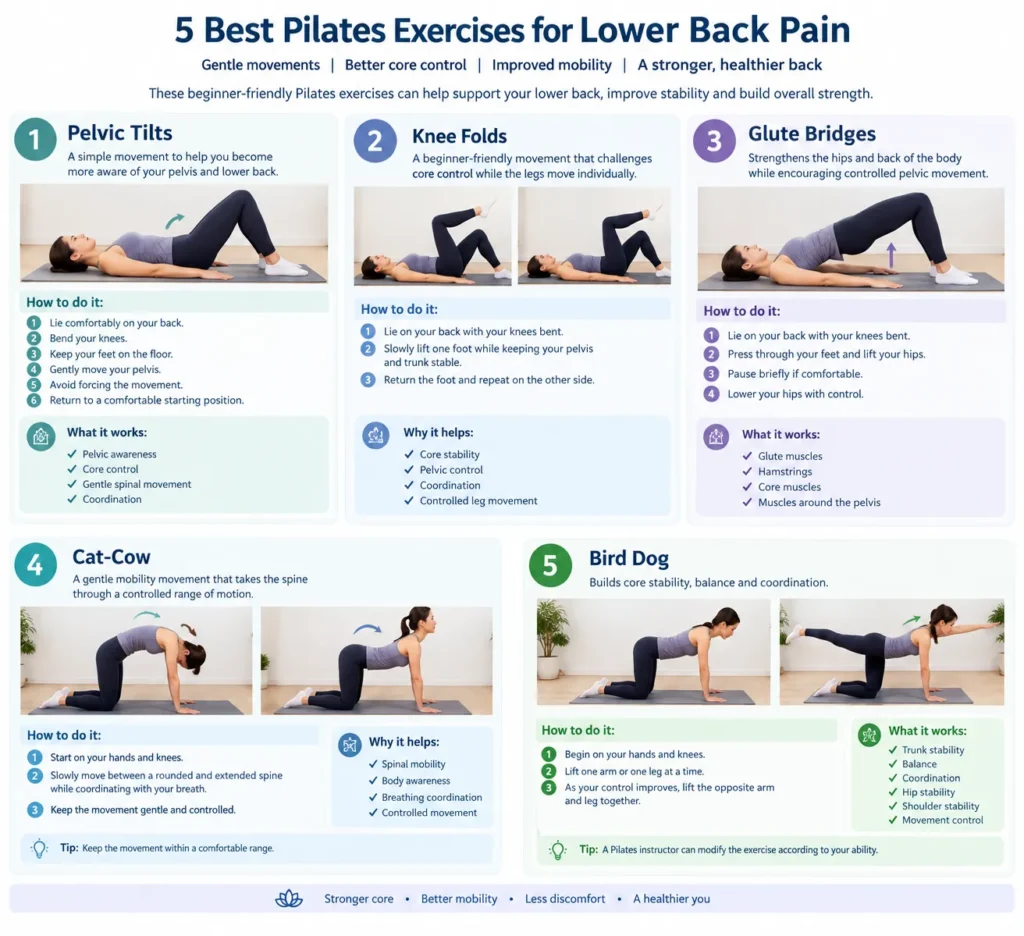
1. Pelvic Tilts
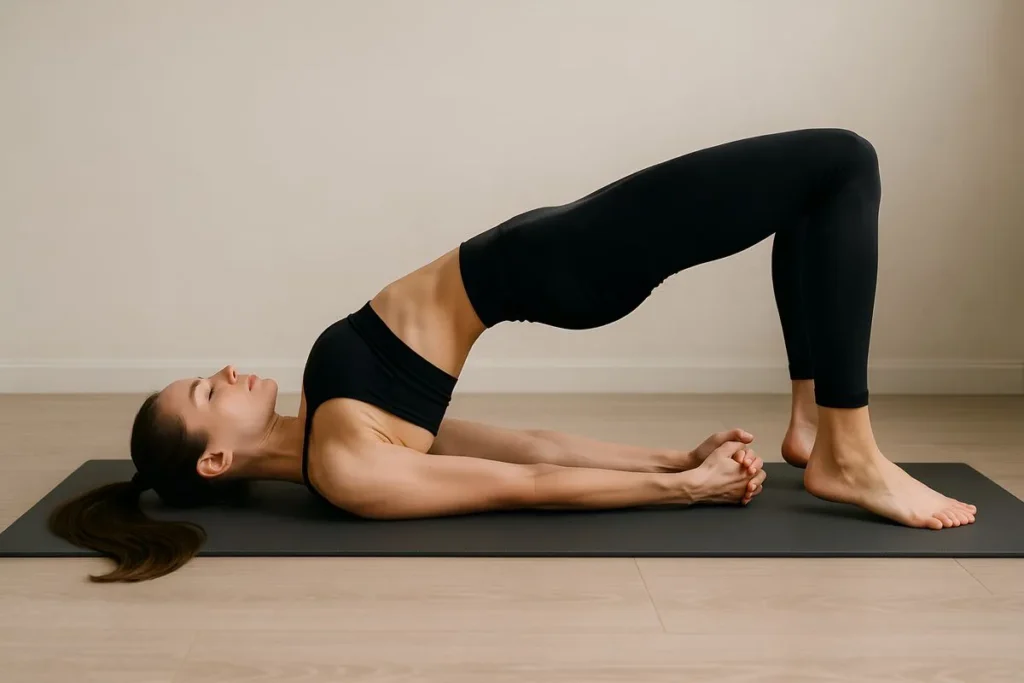
Pelvic tilts are a simple movement that can help beginners develop awareness of how the pelvis and lower back move.
How to perform a basic pelvic tilt
- Lie comfortably on your back.
- Bend your knees.
- Keep your feet supported on the floor.
- Gently move your pelvis.
- Avoid forcing the movement.
- Return to a comfortable starting position.
The movement should feel controlled rather than aggressive.
What does the pelvic tilt work?
It may help develop:
- Pelvic awareness
- Core control
- Gentle spinal movement
- Coordination
2. Knee Folds
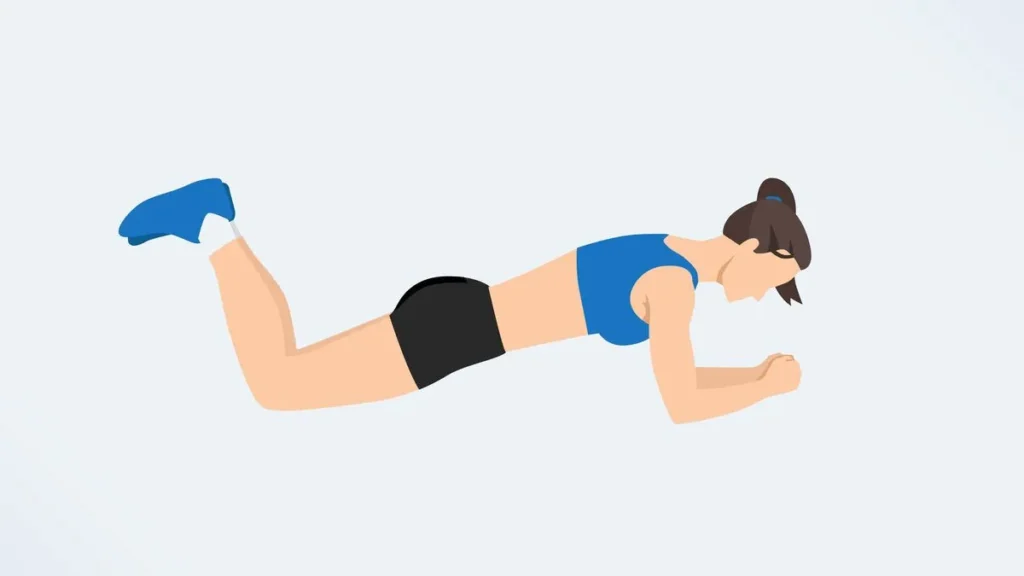
Knee folds are a beginner-friendly movement that can challenge core control while the legs move individually.
Start lying on your back with your knees bent.
Slowly lift one foot while maintaining control of your pelvis and trunk. Return the foot and repeat on the other side.
Why are knee folds useful?
They can help you practise:
- Core stability
- Pelvic control
- Coordination
- Controlled leg movement
This can be particularly relevant for people who want to improve their movement after spending long hours sitting.
3. Glute Bridges
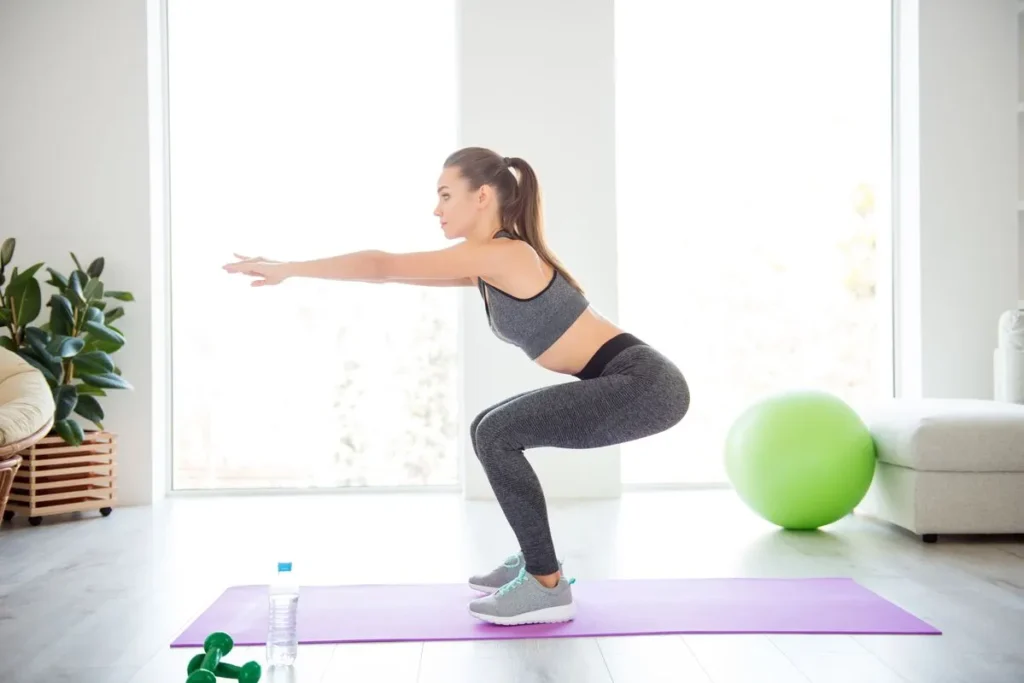
Glute bridges strengthen the muscles around the hips and back of the body while encouraging controlled pelvic movement.
Lie on your back with your knees bent.
Press through your feet and gradually lift your hips. Pause briefly if comfortable, then lower your hips with control.
What muscles does a glute bridge work?
A glute bridge can involve:
- Glute muscles
- Hamstrings
- Core muscles
- Muscles around the pelvis
Developing hip and glute strength can be a useful part of overall movement training.
4. Cat-Cow
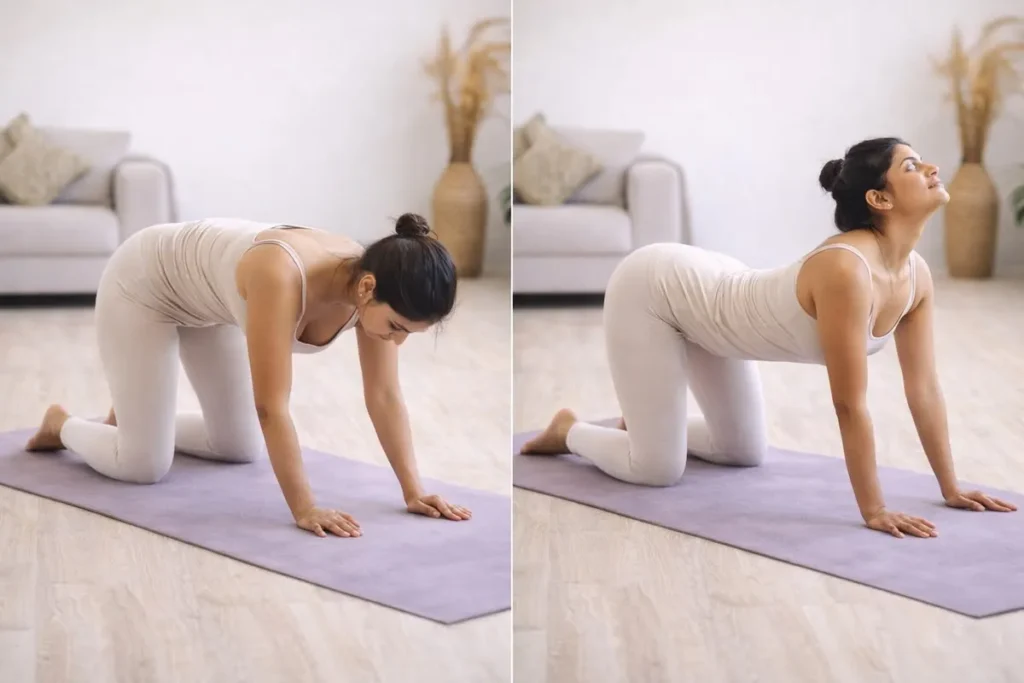
Cat-Cow is a gentle mobility movement that takes the spine through a controlled range of motion.
Start on your hands and knees.
Slowly move between a rounded spinal position and a more extended position while coordinating the movement with your breathing.
Why is Cat-Cow useful for people who sit all day?
After spending hours at a desk, gentle movement may help you avoid remaining in one position continuously.
Cat-Cow can be used to work on:
- Spinal mobility
- Body awareness
- Breathing coordination
- Controlled movement
The movement should remain within a comfortable range.
5. Bird Dog
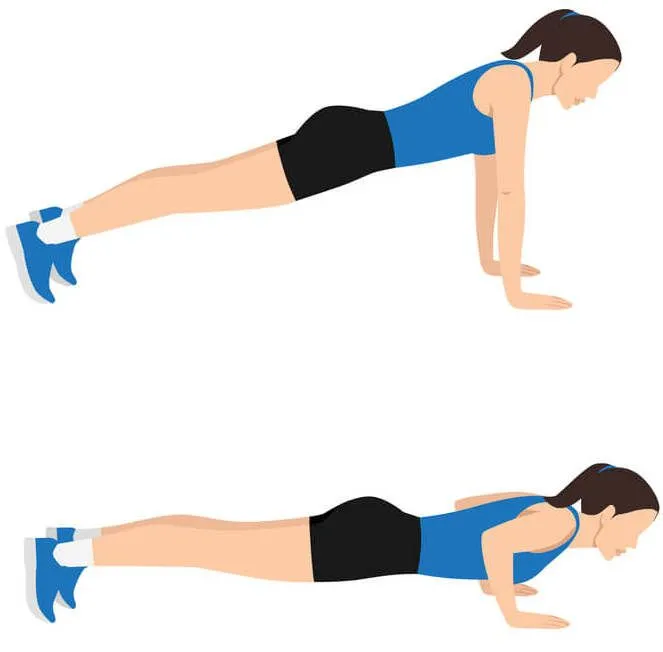
Bird Dog variations can help develop core stability, balance and coordination.
Begin on your hands and knees.
Start by lifting one arm or one leg at a time. As your control improves, you may progress to lifting the opposite arm and leg together.
What does Bird Dog improve?
It may help develop:
- Trunk stability
- Balance
- Coordination
- Hip stability
- Shoulder stability
- Movement control
A Pilates instructor can modify the exercise according to your ability.
Pilates Exercises for Back Pain: Problem-to-Exercise Guide
The following table can make it easier for readers to understand how different Pilates movements may fit into a back-focused programme.
| Common Concern | Pilates Movement That May Be Used | Main Training Focus |
|---|---|---|
| Lower-back stiffness | Pelvic Tilts | Pelvic awareness and mobility |
| Reduced core control | Knee Folds | Core stability |
| Weak hips or glutes | Glute Bridges | Hip and glute strength |
| Spinal stiffness | Cat-Cow | Spinal mobility |
| Poor trunk stability | Bird Dog | Stability and coordination |
| Prolonged sitting | Mobility + strengthening | Overall movement |
| Postural awareness | Core and spinal control exercises | Body awareness |
Important: This table is a general educational guide, not an individual exercise prescription.
Can Pilates Improve Posture and Back Comfort?
Pilates may improve postural awareness by helping people develop better control of their trunk, pelvis and other parts of the body during movement.
However, there is no single “perfect posture” that everyone needs to maintain throughout the day.
For office workers, a more practical approach is to:
- Change positions regularly
- Avoid sitting continuously for very long periods
- Take movement breaks
- Walk during the day
- Maintain an appropriate workstation setup
- Build general strength and mobility
Pilates can complement these habits.
Can Pilates Help Back Pain From Sitting All Day?
Pilates may help address some physical factors associated with prolonged sitting, including reduced mobility, weakness and poor movement control.
This is particularly relevant for people searching for:
- Pilates for back pain
- Pilates for office workers
- Pilates for desk workers
- Pilates for people who sit all day
- Exercises for lower back stiffness
- Pilates for posture
- Exercises for professionals
- Reformer Pilates for back pain
Instead of treating Pilates as a replacement for movement during the workday, consider it one part of a broader movement routine.
What Are the Benefits of Pilates for People With Back Discomfort?
A suitable Pilates programme may help support several aspects of physical function.
| Area | How Pilates May Help |
|---|---|
| Core strength | Develops controlled trunk stability |
| Hip strength | Works muscles around the hips and pelvis |
| Mobility | Encourages controlled movement |
| Posture | Develops body and movement awareness |
| Balance | Challenges stability and coordination |
| Flexibility | May support comfortable range of motion |
| Movement control | Encourages deliberate, controlled exercise |
The benefits vary from person to person, and results depend on factors such as consistency, exercise selection and individual circumstances.
Is Reformer Pilates Good for Back Pain?
Reformer Pilates may be suitable for some people with back discomfort when exercises are properly selected and modified.
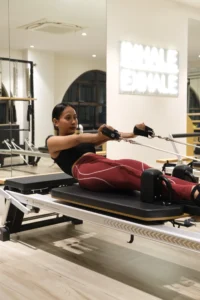
The Reformer uses springs and a moving carriage to provide resistance and support.
An instructor can adjust:
- Spring resistance
- Range of motion
- Exercise difficulty
- Repetitions
- Body position
- Level of support
This can make Reformer Pilates a useful option for people who prefer structured, instructor-guided exercise.
However, back pain does not automatically mean every Reformer exercise is appropriate.
Is Pilates Suitable for Beginners With Back Pain?
Beginners can start Pilates, but people experiencing back pain should begin with exercises appropriate for their symptoms, ability and movement experience.
You do not need to be highly flexible or physically fit before starting Pilates.
A beginner session may focus on:
- Breathing
- Pelvic awareness
- Gentle mobility
- Core control
- Hip movement
- Basic strengthening
- Gradual progression
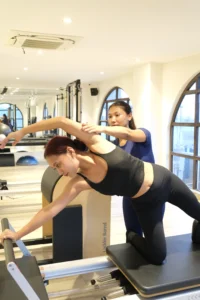
An instructor can demonstrate modifications and help ensure exercises are performed with appropriate control.
How Often Should You Do Pilates for Back Pain?
Consistency is generally more practical than doing an intense Pilates session occasionally.
The appropriate frequency depends on your fitness level, symptoms, goals and programme.
Alongside Pilates, people who sit for long periods can incorporate movement into their daily routine.
Simple movement habits for office workers
| During the Workday | Simple Movement Habit |
|---|---|
| During long sitting periods | Stand and change position |
| Between meetings | Walk for a few minutes |
| During screen work | Take regular movement breaks |
| After work | Include a suitable exercise session |
| During the day | Avoid remaining in one position continuously |
Pilates can support your exercise routine, but it should not replace general daily movement.
What Should You Avoid When Doing Pilates With Back Pain?
There is no universal list of Pilates exercises that everyone with back pain must avoid.
The appropriate exercise depends on the individual.
Be cautious with any movement that causes:
- Significant or increasing pain
- Sudden sharp pain
- New or worsening symptoms
- Numbness or tingling
- Unusual weakness
- Symptoms that continue or worsen after exercise
If a movement does not feel appropriate, stop and seek professional guidance.
When Should You See a Professional About Back Pain?
Not every type of back pain should be managed through exercise alone.
Consider seeking appropriate medical or professional assessment if your back pain is:
- Severe
- Persistent
- Getting worse
- Following a significant injury
- Associated with significant weakness
- Associated with numbness or tingling
- Accompanied by other concerning symptoms
A qualified healthcare professional can help identify whether exercise is appropriate and whether specific modifications are needed.
Pilates for Office Workers With Back Pain
For people who sit at a desk for much of the day, Pilates for Office Workers can focus on several areas that are important for comfortable movement.
A well-rounded programme may include:
Core strength → Hip strength → Spinal mobility → Postural awareness → Movement control
This approach is more useful than focusing only on the lower back.
Office workers can also benefit from combining Pilates with regular walking, movement breaks and an appropriately arranged workstation.
Pilates for Back Pain in Guwahati
People searching for Pilates for back pain in Guwahati may be looking for structured, instructor-guided sessions that take their individual movement needs into account.
Ritual Centre Pilates in Guwahati offers Pilates sessions for people interested in developing strength, mobility, movement control and overall physical awareness.
If you are experiencing ongoing back pain, communicate your symptoms and limitations with your instructor and seek appropriate professional advice when necessary.
Frequently Asked Questions About Pilates for Back Pain
What is the best Pilates exercise for back pain?
There is no single best Pilates exercise for everyone with back pain. Pelvic tilts, knee folds, glute bridges, Cat-Cow and Bird Dog variations may be included in an appropriate programme depending on the person’s symptoms and ability.
Can Pilates cure back pain?
Pilates should not be described as a cure for back pain. It may support strength, mobility, posture and movement control, but back pain can have many different causes.
Is Pilates good for lower back pain?
Pilates may be useful for some people with lower-back discomfort because it can include core strengthening, hip strengthening, mobility and controlled movement.
Can Pilates help back pain from sitting all day?
Pilates may help address physical factors associated with prolonged sitting, such as reduced mobility, weakness and movement-control issues. Regular movement during the workday is also important.
What is the best Pilates exercise for lower back pain?
There is no universally best exercise. Gentle exercises such as pelvic tilts, knee folds and glute bridges may be included depending on the individual’s needs.
Can office workers do Pilates for back pain?
Yes. Pilates for Office Workers can include exercises that work on core strength, hip mobility, spinal movement, posture and overall physical conditioning.
Is Reformer Pilates good for back pain?
Reformer Pilates may be suitable for some people with back discomfort when exercises are appropriately selected and modified by a qualified instructor.
How often should I do Pilates for back pain?
The appropriate frequency depends on your symptoms, fitness level and goals. Consistent, appropriately progressed exercise is generally more practical than occasional intense sessions.
Can beginners do Pilates if they have back pain?
Beginners can participate in Pilates, but exercises should be appropriate for their symptoms and ability. People with persistent or significant back pain should consider professional assessment before beginning.
Do I need to be flexible to start Pilates?
No. You do not need to be highly flexible to begin Pilates. Exercises can be modified according to your current mobility and fitness level.
Can Pilates improve posture?
Pilates may support postural awareness by developing strength, mobility and movement control. It should be combined with regular movement rather than relying on one fixed posture.
Should I exercise when I have back pain?
Whether exercise is appropriate depends on the cause and severity of your pain. Some people may benefit from gentle movement, while others may require professional assessment first.
Key Takeaways: Pilates for Back Pain
| Question | Short Answer |
|---|---|
| What is the best Pilates exercise for back pain? | There is no single best exercise for everyone. |
| Can Pilates help back pain? | It may support strength, mobility and movement control. |
| Is Pilates good for office workers? | It can be part of a balanced exercise routine for people who sit for long periods. |
| Is Reformer Pilates suitable for back pain? | It may be suitable when appropriately modified and supervised. |
| Can beginners do Pilates? | Yes, exercises can be adapted to the individual’s ability. |
| Does Pilates cure back pain? | No, Pilates should not be presented as a universal cure. |
| Should you exercise with severe back pain? | Seek appropriate professional assessment before exercising. |
Conclusion
So, what is the best Pilates exercise for back pain?
The answer is not one particular exercise. The most appropriate Pilates programme depends on the individual’s symptoms, strength, mobility and goals.
Exercises such as pelvic tilts, knee folds, glute bridges, Cat-Cow and Bird Dog variations can be incorporated into suitable programmes to work on core control, hip strength, spinal mobility and coordination.
For people who spend long hours sitting, Pilates for Office Workers can be especially relevant because it combines movement, strengthening and body awareness that can complement a more active workday.
The goal is not simply to stretch or strengthen the back. It is to develop better overall movement, strength, mobility and control while choosing exercises that are appropriate for your individual needs.