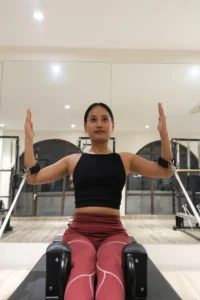
Back pain has become one of the most common health concerns across all age groups. Whether you’re a working professional spending hours at a desk, a student carrying heavy bags, or someone constantly using a smartphone, poor posture and prolonged sitting can place tremendous stress on your spine.
Many people rely on temporary solutions such as painkillers, massages, or hot packs. While these may provide short-term relief, they often fail to address the root cause of the problem. In many cases, poor posture, weak core muscles, muscle imbalances, and reduced mobility are the real reasons behind recurring discomfort.
This is where Pilates stands apart. Instead of simply treating the symptoms, Pilates focuses on improving the way your body moves, aligns, and supports itself. Through controlled, low-impact exercises, Pilates strengthens the deep muscles that stabilise the spine, improves flexibility, enhances balance, and encourages better posture in everyday life.
At Ritual Centre, North East India’s largest Pilates sanctuary, every session is designed to help individuals move better, feel stronger, and build lifelong habits for spinal health. Whether you’re looking to reduce back pain, improve posture, or simply move with greater confidence, Pilates offers a sustainable and effective path to wellness.
Understanding the Connection Between Posture and Back Pain
Your spine is designed to maintain natural curves that distribute body weight evenly and allow smooth movement. However, modern lifestyles often disrupt this balance.
Hours spent working on laptops, scrolling through phones, driving, or watching television can lead to poor posture habits such as the following:
- Rounded shoulders
- Forward head position
- Slouched sitting
- Excessive lower back arch
- Tight hip flexors
- Weak abdominal muscles
Over time, these imbalances increase pressure on the spine, muscles, ligaments, and joints. As the body compensates for poor alignment, discomfort can develop in the neck, shoulders, upper back, and lower back.
Common symptoms include:
- Persistent lower back pain
- Neck stiffness
- Shoulder tension
- Poor balance
- Muscle fatigue
- Reduced flexibility
- Frequent headaches caused by poor posture
Correcting these movement patterns is essential for long-term relief, and Pilates provides one of the safest and most effective ways to achieve this.
What Makes Pilates Different?
Unlike traditional workouts that often focus on burning calories or lifting heavier weights, Pilates is built around precision, control, breathing, and proper alignment.
Every exercise encourages you to engage your deep stabilising muscles while maintaining correct posture throughout the movement.
Pilates emphasises:
- Core strength
- Spinal alignment
- Controlled breathing
- Muscle balance
- Flexibility
- Stability
- Mind-body awareness
Rather than overworking isolated muscles, Pilates trains your body to move as one integrated system.
How Pilates Improves Posture
1. Strengthens the Deep Core Muscles
Many people think the core only includes the abdominal muscles.
In reality, your core consists of a complex group of muscles that support your spine and pelvis, including:
- Transverse abdominis
- Multifidus
- Pelvic floor muscles
- Diaphragm
- Obliques
These muscles act like a natural support system for your spine.
Weak core muscles force the back muscles to compensate, leading to fatigue and pain.
Pilates strengthens these deep stabilisers, making it easier to maintain proper posture while sitting, standing, walking, or exercising.
2. Corrects Muscle Imbalances
Poor posture often develops because some muscles become tight while others become weak.
For example:
- Tight chest muscles pull the shoulders forward.
- Weak upper back muscles fail to keep the shoulders aligned.
- Tight hip flexors tilt the pelvis.
- Weak glutes reduce pelvic stability.
Pilates identifies and addresses these imbalances through targeted strengthening and stretching exercises.
As muscle balance improves, posture naturally becomes more aligned.
3. Increases Body Awareness
One of the unique benefits of Pilates is developing awareness of how your body moves.
Many people don’t realise when they’re slouching or placing unnecessary strain on their back.
Pilates teaches participants to recognise the following:
- Shoulder position
- Pelvic alignment
- Spine positioning
- Breathing patterns
- Weight distribution
This awareness gradually carries into everyday activities, helping maintain better posture even outside the studio.
4. Improves Spinal Mobility
A healthy spine should move efficiently in multiple directions.
Sedentary lifestyles often make the spine stiff and less mobile.
Pilates includes gentle movements that improve the following:
- Flexion
- Extension
- Rotation
- Side bending
Improved spinal mobility reduces stiffness and allows the body to move more comfortably throughout the day
How Pilates Helps Reduce Back Pain
Builds Strong Spinal Support
Your spine depends on surrounding muscles for stability.
When these muscles are weak, pressure shifts directly onto the spinal joints and discs.
Pilates strengthens the muscles surrounding the spine, reducing unnecessary stress and improving support during everyday movement.
Reduces Pressure on the Lower Back
Many cases of lower back pain result from poor movement patterns rather than injury.
Pilates teaches proper movement mechanics by improving the following:
- Hip mobility
- Core activation
- Pelvic stability
- Movement coordination
These improvements significantly reduce excessive loading on the lower back.
Improves Flexibility
Tight muscles frequently contribute to chronic back pain.
Pilates gently stretches muscles, including the following:
- Hamstrings
- Hip flexors
- Glutes
- Lower back
- Chest
- Shoulders
Greater flexibility allows the body to move freely without placing unnecessary stress on the spine.
Encourages Better Breathing
Breathing influences posture more than many people realise.
Shallow chest breathing often increases tension in the neck and shoulders.
Pilates incorporates controlled breathing techniques that:
- Activate deep core muscles
- Improve oxygen flow
- Reduce muscular tension
- Promote relaxation
Better breathing patterns contribute to improved posture and reduced discomfort.
Enhances Joint Stability
Healthy movement depends on stability as much as mobility.
Pilates develops stability throughout the following:
- Spine
- Pelvis
- Hips
- Shoulders
Stable joints move more efficiently and are less prone to pain and injury.
Everyday Habits That Cause Poor Posture
Even if you exercise regularly, daily habits can still affect your spinal health.
Common posture mistakes include:
- Sitting for long periods without breaks
- Looking down at your phone constantly
- Working from poorly designed desks
- Carrying heavy bags on one shoulder
- Standing unevenly
- Wearing unsupportive footwear
- Sleeping in poor positions
Pilates helps reverse the effects of these habits by restoring proper movement and alignment.
Who Can Benefit from Pilates?
Pilates is suitable for people of almost every age and fitness level.
It is especially beneficial for:
- Office Professionals
Long hours at a desk often lead to neck pain, rounded shoulders, and lower back discomfort.
Pilates strengthens postural muscles while reducing muscular tension.
- Students
Heavy backpacks and prolonged studying can affect spinal alignment.
Pilates improves posture during growth and development.
- Athletes
Athletes use Pilates to improve balance, flexibility, core strength, and injury prevention.
- Seniors
Pilates helps maintain mobility, balance, coordination, and independence through low-impact exercise.
Individuals Recovering from Injury
Under professional supervision, Pilates can support rehabilitation by restoring movement quality and strengthening stabilising muscles.
Scientific Benefits of Pilates
Research has consistently shown that Pilates can provide measurable improvements in musculoskeletal health.
Regular Pilates practice has been associated with the following:
- Reduced chronic lower back pain
- Improved posture
- Better balance
- Increased flexibility
- Enhanced muscular endurance
- Improved core stability
- Greater movement efficiency
- Better quality of life
These benefits explain why physiotherapists, orthopaedic specialists, and rehabilitation professionals often recommend Pilates as part of a comprehensive recovery and wellness plan.
Why Consistency Matters
Pilates is not about achieving overnight results.
Like any effective exercise programme, consistency produces lasting change.
With regular sessions, many people notice:
After a few weeks
- Better posture awareness
- Reduced stiffness
- Improved flexibility
- Increased energy
After several months
- Stronger core muscles
- Reduced back pain
- Better spinal alignment
- Improved confidence
- Easier daily movement
The goal is not simply temporary pain relief – it is creating a healthier movement pattern for life.
Why Choose Ritual Centre for Pilates?
Finding the right Pilates studio is essential for achieving safe and effective results.
At Ritual Centre, every session is guided by trained professionals who focus on correct technique, individual goals, and long-term wellness. The centre features internationally recognised Merrithew Pilates equipment, a calm studio environment, and personalised programmes tailored to different fitness levels.
Whether you’re completely new to Pilates or looking to deepen your practice, Ritual Centre provides the following:
- Expert guidance from qualified instructors
- Personal, duet, and group Pilates sessions
- Premium Pilates equipment
- A supportive and welcoming environment
- Focus on posture correction and functional movement
- Individual attention to help you progress safely
By combining mindful movement with expert instruction, Ritual Centre helps you build strength, improve posture, and move with confidence every day.
Tips to Maintain Good Posture Between Pilates Sessions
While Pilates forms the foundation for better posture, small daily habits can make an even bigger difference.
Here are a few simple tips:
- Sit with both feet flat on the floor.
- Keep your computer screen at eye level.
- Stand up and stretch every 30–60 minutes.
- Avoid looking down at your phone for long periods.
- Engage your core while standing and walking.
- Use supportive footwear whenever possible.
- Sleep on a mattress that supports your spine.
- Stay physically active throughout the day.
Combining these habits with regular Pilates sessions can significantly reduce your risk of developing chronic back pain.
Conclusion
Good posture is about much more than standing tall – it is the foundation of a healthy, pain-free body. When your spine is properly aligned and supported by strong core muscles, everyday movements become easier, more efficient, and less stressful on your joints.
Pilates offers a holistic approach by addressing the root causes of poor posture and recurring back pain rather than simply masking symptoms. Through mindful movement, controlled breathing, improved flexibility, and targeted strengthening, it helps restore balance, enhance mobility, and support long-term spinal health.
At Ritual Centre, you’ll find a welcoming environment, expert guidance, and world-class Pilates equipment designed to help you move with confidence and live without unnecessary discomfort. Whether you’re dealing with persistent back pain or simply want to improve your posture and overall well-being, Pilates can be a life-changing investment in your health.
Start Your Journey to Better Posture Today
Take the first step toward a stronger core, healthier spine, and pain-free movement with expert-led Pilates sessions at Ritual Centre. Discover how mindful movement can transform the way you feel, stand, and live.
Contact Us
Call: +91 69130 30757
Email: ritualcentre@gmail.com