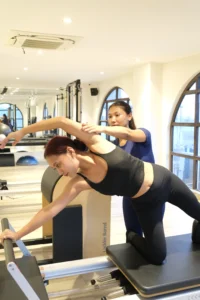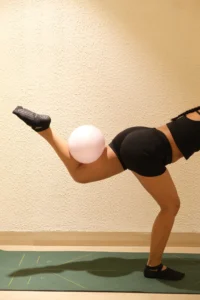
When people think about Pilates, they often imagine slow, controlled movements, stretching exercises and gentle workouts designed for improving flexibility. While Pilates is widely appreciated for its role in general fitness and wellness, its benefits extend far beyond that perception.
Today, athletes from different sporting backgrounds are exploring Pilates as a complementary training method to improve their physical conditioning. Runners, cyclists, swimmers, football players, tennis players, weightlifters and other sports enthusiasts are recognising that athletic performance is not determined by strength and endurance alone.
Being a strong athlete also requires balance, mobility, coordination, body awareness, stability and the ability to control movement under pressure.
This is where Pilates becomes valuable.
Pilates for athletes is a movement-based training approach that focuses on core strength, controlled movement, flexibility, posture, balance and muscular coordination. It can complement sport-specific training by helping athletes develop better movement control and improve their overall physical conditioning.
Whether someone is preparing for a marathon, training for a competitive sporting event or simply trying to become stronger and more efficient in their chosen sport, Pilates offers a different dimension of physical training.
At Ritual Centre Pilates, the focus is on mindful movement, strength, control and reconnecting with the body. These principles can be valuable not only for fitness enthusiasts but also for individuals who want to build a stronger foundation for an active lifestyle.
Let’s explore why serious athletes are adding Pilates to their training routines and how it can support their sporting goals.
1. Why Are Serious Athletes Exploring Pilates?
Athletic training often focuses on developing specific physical abilities. Runners work on endurance, weightlifters focus on strength, swimmers improve cardiovascular efficiency, and football players train for speed and agility.
However, focusing exclusively on sport-specific exercises may leave other important movement qualities underdeveloped.
For example, a runner may have excellent cardiovascular endurance but struggle with hip mobility. A weightlifter may have considerable muscular strength but limited thoracic mobility. A tennis player may possess powerful strokes but need better rotational control and balance.
These limitations can influence how efficiently the body moves.
Pilates introduces a more comprehensive approach to physical conditioning. Instead of concentrating on one muscle group or one performance metric, it encourages the body to work as a coordinated system.
Athletes explore Pilates because it can help them:
- Develop stronger core muscles.
- Improve flexibility and joint mobility.
- Build better balance and coordination.
- Increase awareness of posture and alignment.
- Improve control during complex movements.
- Support recovery between demanding training sessions.
- Identify movement limitations that may affect performance.
Pilates does not replace strength training, cardiovascular conditioning or sport-specific practice. Instead, it can complement these activities by addressing aspects of movement that traditional training may not always prioritise.
For athletes who want to perform consistently, developing a balanced and well-conditioned body is just as important as improving individual sporting skills.
2. Core Strength: The Foundation of Athletic Performance
One of the biggest reasons athletes explore Pilates is its emphasis on core strength.
The core is much more than the abdominal muscles. It includes the muscles surrounding the trunk, pelvis, hips and spine that help stabilise the body during movement.
A well-conditioned core supports the transfer of force between the upper and lower body. This becomes particularly important in sports that involve running, jumping, lifting, twisting, throwing and changing direction.
Consider a football player sprinting across the field. Their legs generate force, but the trunk must remain sufficiently stable to support efficient movement.
Similarly, a tennis player relies on coordinated movement through the legs, pelvis and trunk to produce a powerful and controlled stroke.
Pilates incorporates exercises that challenge the deep abdominal muscles, pelvic stability and spinal control.
Some commonly used Pilates movements include:
- The Hundred.
- Dead Bug variations.
- Single Leg Stretch.
- Plank variations.
- Leg Circles.
- Bridge exercises.
These movements encourage controlled engagement of the abdominal muscles while maintaining proper alignment.
How does core strength help athletes?
A stronger and more coordinated core can support:
- Better postural control during movement.
- Improved stability during single-leg activities.
- More efficient transfer of force between body segments.
- Better control during rotational movements.
- Greater awareness of body positioning.
For athletes, core training is not simply about developing visible abdominal muscles. It is about creating a stable foundation that supports movement throughout the body.
3. Improved Flexibility and Mobility for Better Movement
Strength and endurance are important, but athletes also need sufficient mobility to perform movements effectively.
Flexibility refers to the ability of muscles and surrounding tissues to lengthen, while mobility involves the ability to move a joint through its available range of motion with control.
Both are important for athletic conditioning.
For example:
- Runners need sufficient hip and ankle mobility for comfortable running mechanics.
- Swimmers benefit from shoulder mobility to support efficient arm movements.
- Tennis players require rotational mobility through the hips and upper back.
- Weightlifters need appropriate ankle, hip and thoracic mobility for lifting positions.
Pilates incorporates controlled movements that encourage mobility through different areas of the body.
Exercises involving spinal articulation, hip circles, shoulder movement and controlled leg extensions can help individuals explore their available range of motion.
Unlike passive stretching alone, Pilates combines movement with muscular engagement. This encourages individuals to develop control throughout the range of motion they can comfortably access.
Why is mobility important for athletes?
Restricted movement in one area may influence how another part of the body compensates.
For example, limited ankle mobility may affect squat mechanics. Restricted hip movement may change how an athlete moves while running or changing direction.
Pilates can help athletes become more aware of these movement patterns and work towards improving their control and mobility.
However, mobility requirements differ between sports and individuals. The goal is not to become excessively flexible but to develop the appropriate range of motion needed for efficient, controlled movement.
4. Better Balance and Coordination
Balance is an essential component of almost every sport.
Whether an athlete is landing after a jump, changing direction, kicking a ball or maintaining stability during a challenging movement, their body constantly adjusts to maintain control.
Pilates includes exercises that challenge balance, coordination and stability through controlled movement.
Single-leg exercises, alternating arm and leg movements, side-lying sequences and standing balance work can encourage better coordination between different muscle groups.
For example, a runner repeatedly moves from one leg to the other during each stride. The body must maintain stability while the opposite leg moves forward.
A football player needs to remain balanced while passing, kicking and changing direction.
A tennis player must control their body while moving laterally and preparing for a shot.
Pilates can complement the training of these movement patterns by encouraging greater awareness of body positioning.
How can Pilates improve athletic balance?
Pilates exercises may help individuals develop:
- Better awareness of their centre of gravity.
- Improved trunk stability.
- More controlled single-leg movement.
- Better coordination between the upper and lower body.
- Greater control during transitions between movements.
Balance training is particularly useful when incorporated progressively. Athletes should begin with movements suited to their ability and gradually introduce more challenging variations.
5. Can Pilates Help Prevent Sports Injuries?
Sports injuries can occur for many reasons, including sudden impact, excessive training loads, fatigue, inadequate recovery, movement demands and previous injuries.
Although no exercise programme can guarantee injury prevention, developing strength, mobility, balance and movement control can contribute to a more comprehensive conditioning routine.
Pilates can support this approach by helping athletes work on physical qualities that are important for movement.
For example, a runner may benefit from exercises that strengthen the hips and improve pelvic control. A weightlifter may work on trunk stability and mobility. A tennis player may incorporate exercises that improve shoulder control and rotational coordination.
These exercises can complement sport-specific conditioning.
How does Pilates support injury prevention?
Pilates may contribute to injury risk management through several areas:
1. Muscular balance
Training different muscle groups can help address strength differences and movement limitations.
2. Better movement awareness
Controlled exercises encourage individuals to notice how they position and move their bodies.
3. Joint control
Exercises that involve controlled movement can develop strength and coordination around important joints.
4. Improved mobility
Working on appropriate joint mobility may help athletes move more comfortably within the ranges required by their sport.
5. Core stability
A well-conditioned trunk can support posture and control during demanding movements.
It is important to understand that Pilates is not a substitute for medical treatment or sports physiotherapy. Athletes recovering from injuries should seek guidance from a qualified healthcare professional before starting or modifying their exercise routine.
6. Pilates for Runners: More Than Just Stretching
Running may appear to be a straightforward activity, but it requires coordination between multiple muscle groups.
Every running stride involves the hips, knees, ankles, core and upper body working together.
Runners often concentrate on increasing mileage, improving pace and building cardiovascular endurance. However, strength, stability and mobility also contribute to their overall physical conditioning.
This is why Pilates for runners has become an interesting complementary training option.
Pilates can help runners work on:
- Core stability.
- Hip strength and control.
- Pelvic stability.
- Ankle and hip mobility.
- Postural awareness.
- Single-leg balance.
- Controlled breathing.
For example, bridge exercises can challenge the glutes and pelvic stability. Side-lying leg exercises can target the hip muscles. Plank variations can develop trunk strength.
These movements complement running by addressing physical qualities that may receive less attention during regular running sessions.
Why should marathon runners consider Pilates?
Long-distance running places repeated demands on the body.
As training duration increases, fatigue can influence posture, movement coordination and muscular control.
Pilates may provide runners with a structured way to work on core strength, mobility and body awareness alongside their regular running programme.
It can be particularly useful during supplementary strength and conditioning sessions, provided the training intensity and timing are appropriate.
7. Pilates for Weightlifters and Strength Training Enthusiasts
Many people assume that athletes who lift heavy weights do not need Pilates.
However, strength and movement control are different physical qualities that work together.
Weightlifting requires appropriate joint mobility, trunk stability, muscular coordination and the ability to maintain technique under load.
A person may be able to lift considerable weight but still have limitations in certain movement patterns.
Pilates can complement resistance training by focusing on controlled movement, postural alignment and muscular engagement.
Potential benefits for weightlifters
Core control: Pilates challenges the abdominal and trunk muscles, which are important for maintaining stability during lifting movements.
Hip mobility: Controlled hip movements may help individuals explore and improve their available range of motion.
Spinal awareness: Pilates encourages controlled spinal movement and awareness of alignment.
Movement coordination: Exercises involving multiple body segments help develop coordination and control.
Recovery-focused movement: Lower-intensity Pilates sessions may offer an alternative to high-load training days.
For someone who regularly performs squats, deadlifts, overhead presses and other compound exercises, Pilates can add variety to their conditioning routine.
It should be viewed as complementary training rather than a replacement for progressive resistance training.
8. Pilates for Football, Tennis and Other Competitive Sports
Different sports require different combinations of physical abilities.
A football player needs acceleration, deceleration, agility, balance and endurance. A tennis player requires rotational power, coordination and lateral movement. A swimmer depends on shoulder mobility, trunk control and efficient body positioning.
Pilates can complement these sporting demands by developing general movement qualities.
Pilates for football players
Football involves repeated sprinting, sudden changes in direction, jumping, kicking and maintaining balance under pressure.
Pilates can help football players work on:
- Trunk stability.
- Hip mobility.
- Single-leg strength and control.
- Balance.
- Coordination.
Pilates for tennis players
Tennis involves repeated rotational movements, quick directional changes and powerful strokes.
Pilates can support training focused on:
- Rotational control.
- Shoulder mobility.
- Core strength.
- Hip stability.
- Balance during lateral movements.
Pilates for swimmers
Swimming involves coordinated movements of the upper and lower body while maintaining a streamlined position in the water.
Pilates can complement swimming through:
- Trunk strength.
- Shoulder mobility.
- Pelvic control.
- Postural awareness.
- Controlled breathing.
Pilates for cyclists
Cycling involves maintaining a relatively consistent body position while producing repeated movements through the legs.
Cyclists may explore Pilates to work on:
- Hip mobility.
- Core endurance.
- Thoracic mobility.
- Postural awareness.
- Movement control.
The specific benefits depend on the athlete’s training history, sport, technique and individual needs.
9. Better Posture and Body Awareness
Posture is not simply about standing straight or keeping the shoulders back.
It involves how the body positions itself during different activities and how effectively muscles work together to support movement.
Athletes spend considerable time practising repetitive sport-specific movements. Over time, their training may place greater demands on certain muscle groups and movement patterns.
For example, cyclists spend extended periods in a forward-leaning position. Swimmers perform repeated shoulder movements. Runners repeat similar lower-body movement patterns over long distances.
Pilates encourages awareness of spinal alignment, pelvic positioning, breathing and muscular engagement.
This can help individuals better understand how they move.
Improved body awareness may also help athletes recognise unnecessary tension, poor movement habits or differences between their left and right sides.
The objective is not to maintain one perfect posture throughout the day. Instead, it is to develop the ability to move with greater awareness and control across different positions.
10. The Role of Breathing in Athletic Performance
Breathing is something most people do automatically, but breathing patterns are also an important part of physical training.
Athletes rely on effective breathing to support exercise intensity, endurance and recovery.
Pilates places considerable emphasis on coordinating breathing with movement.
This encourages individuals to become more aware of their breathing patterns while performing controlled exercises.
For athletes, this can complement training by improving awareness of breath, movement coordination and muscular tension.
Breathing techniques used in Pilates are not a replacement for sport-specific breathing strategies or cardiovascular conditioning. However, learning to coordinate breathing with controlled movements can be a useful addition to an athlete’s overall training approach.
11. Can Pilates Improve Athletic Recovery?
Recovery is a fundamental part of any training programme.
Athletes do not become stronger simply by exercising more. Their bodies also need sufficient time, nutrition, sleep and appropriate recovery strategies to adapt to training demands.
Adding more intense workouts is not always the answer.
Pilates can be incorporated into a training schedule as a lower-impact movement session, depending on the exercises selected and their intensity.
A controlled Pilates session may help athletes focus on:
- Gentle mobility work.
- Controlled muscular engagement.
- Breathing awareness.
- Movement coordination.
- Comfortable range of motion.
- Relaxed and mindful movement.
For example, an athlete who has completed several demanding training sessions may use an appropriately modified Pilates session to focus on movement quality rather than high-intensity exercise.
However, a challenging Pilates class can also create substantial muscular fatigue. The intensity should therefore be adjusted according to the athlete’s training schedule and recovery requirements.
12. Mat Pilates vs Reformer Pilates: Which Is Better for Athletes?
Athletes exploring Pilates may come across two common approaches: Mat Pilates and Reformer Pilates.
Both use Pilates principles, but they differ in how exercises are performed.
Mat Pilates
Mat Pilates involves performing exercises on a mat, often using body weight and gravity to create resistance.
It focuses on:
- Core strength.
- Body control.
- Flexibility.
- Coordination.
- Balance.
- Postural awareness.
Mat Pilates can be a useful starting point for athletes who want to understand the fundamentals of Pilates movement.
Reformer Pilates
Reformer Pilates uses a specialised machine with a moving carriage, springs, straps and other components.
The resistance can be adjusted according to the exercise and the individual’s ability.
Reformer Pilates can provide opportunities to work on:
- Controlled resistance.
- Muscular strength.
- Balance and stability.
- Range of motion.
- Movement coordination.
- Full-body conditioning.
For athletes, the adjustable resistance can make it possible to modify exercises according to their physical abilities and training goals.
Which Pilates method should athletes choose?
There is no single answer.
The right approach depends on the athlete’s experience, training objectives, mobility, physical condition and professional guidance.
Beginners may benefit from learning fundamental movement principles before progressing to more challenging exercises.
The quality of instruction and appropriate exercise modifications matter more than simply choosing one Pilates method over another.
13. How Often Should Athletes Do Pilates?
The ideal Pilates frequency depends on the athlete’s sporting schedule, training intensity, recovery capacity and experience.
An athlete who is new to Pilates may begin with one or two sessions per week and gradually adjust the frequency based on how their body responds.
For example:
- Beginners: One session per week to understand the fundamentals.
- Recreational athletes: One or two sessions per week alongside regular training.
- Experienced athletes: Two sessions per week may be appropriate when coordinated with their overall conditioning programme.
These are general starting points, not fixed prescriptions.
Athletes preparing for competitions should consider the timing and intensity of Pilates sessions carefully. A demanding session immediately before an important competition may not be suitable.
The goal is to complement the existing training programme without creating unnecessary fatigue.
14. Can Beginners and Professional Athletes Both Benefit from Pilates?
Yes. Pilates can be adapted to different experience and fitness levels.
Someone who has never participated in structured exercise can start with basic movements and gradually develop strength and coordination.
An experienced athlete can explore more challenging exercises to address specific conditioning needs.
The difference lies in exercise selection, progression and individual goals.
For beginners, the priority may be learning breathing techniques, alignment and basic core engagement.
For experienced athletes, training may involve more challenging balance exercises, controlled resistance and sport-relevant movement patterns.
Importantly, athletes should not assume that their sporting experience automatically makes them advanced Pilates practitioners.
Pilates has its own movement principles and techniques. Learning these fundamentals under appropriate instruction can help individuals get more from their sessions.
15. How to Combine Pilates with Your Existing Sports Training
Pilates works best when it is integrated thoughtfully into an athlete’s overall fitness routine.
It should not interfere with essential sport-specific practice, strength training or recovery.
Here is an example of how a recreational athlete might structure a balanced training week:
| Day | Training focus |
|---|---|
| Monday | Sport-specific training |
| Tuesday | Pilates session |
| Wednesday | Strength training |
| Thursday | Sport-specific practice |
| Friday | Pilates and mobility |
| Saturday | Sports practice or endurance training |
| Sunday | Rest and recovery |
This is only an illustrative schedule. Competitive athletes may need a more individualised plan based on their training volume and competition calendar.
A few practical recommendations can help:
- Start with manageable Pilates sessions.
- Inform the instructor about your sport and training goals.
- Avoid adding intense sessions when already fatigued.
- Adjust your routine during competition periods.
- Allow adequate recovery between demanding workouts.
- Progress exercises gradually.
The key is to treat Pilates as part of a broader athletic development strategy.
16. Common Myths About Pilates and Athletes
Despite its growing popularity, several misconceptions still surround Pilates.
Let’s clarify some of the most common ones.
Myth 1: Pilates is only for women.
Fact: Pilates is suitable for people of different genders, ages and fitness levels. Its principles of strength, stability, flexibility and movement control can be relevant to anyone involved in physical activity.
Myth 2: Pilates is too easy for serious athletes.
Fact: Pilates exercises can be modified to create different levels of challenge. Advanced movements involving controlled resistance, balance and coordination can be physically demanding.
Myth 3: Athletes only need strength training.
Fact: Strength is important, but athletic performance also depends on mobility, balance, coordination, endurance and movement control. Pilates can complement conventional strength training.
Myth 4: Pilates can replace sports training.
Fact: Pilates does not replace the technical, tactical, cardiovascular or strength requirements of a particular sport. It is best understood as complementary conditioning.
Myth 5: Pilates guarantees injury prevention.
Fact: No exercise programme can eliminate injury risk. Pilates may support physical conditioning, but injury risk depends on multiple factors, including training loads, recovery, technique and individual health.
17. Why Choose Ritual Centre Pilates in Guwahati?
Finding the right environment to practise Pilates can make a meaningful difference to the overall experience.
At Ritual Centre Pilates, the approach centres on mindful movement, strength, balance and reconnecting with the body.
Located at Nikita Pinnacle, Khanapara, Guwahati, Ritual Centre provides an opportunity for individuals interested in exploring Pilates as part of their fitness and wellness journey.
For athletes and sports enthusiasts, Pilates can be an opportunity to step away from repetitive sport-specific training and focus on different aspects of physical conditioning.
Whether your goal is to improve core strength, explore better mobility, develop body awareness or build a more balanced exercise routine, Pilates can become a valuable addition to your lifestyle.
You do not have to be a professional athlete or an experienced fitness enthusiast to begin.
You can start with the fundamentals, understand your body’s movement patterns and gradually progress at a suitable pace.
If you are already involved in a sport, share your training background and goals with your instructor so that your sessions can be approached with your individual needs in mind.
Explore Pilates at Ritual Centre, Guwahati, and discover a more mindful approach to movement, strength and physical wellbeing.
Website: https://ritualcentre.com/
Location: 5th Floor, Nikita Pinnacle, Near Bank of Baroda, Khanapara, Guwahati, Assam.
18. The Bigger Picture: Building a Stronger, More Balanced Athlete
Athletic performance is not just about how much weight you can lift, how fast you can run or how long you can keep going.
It is also about how efficiently you move, how well your body coordinates different muscle groups and how effectively you manage the physical demands of your sport.
Pilates brings attention to these often-overlooked aspects of conditioning.
By incorporating controlled movements, core engagement, balance exercises, mobility work and breathing awareness, Pilates can complement the physical preparation of athletes across different sporting disciplines.
It is not a shortcut to sporting success, nor is it a replacement for dedicated training. Instead, it offers another way to understand and develop the body.
For runners, weightlifters, swimmers, cyclists, football players and recreational sports enthusiasts, Pilates can be a useful part of a well-rounded training programme.
The strongest training routines are not always the ones that involve doing more. Sometimes, they are the ones that help you move better.
And that is exactly why serious athletes are beginning to look beyond traditional workouts and explore Pilates.
Frequently Asked Questions About Pilates for Athletes
1. Is Pilates good for athletes?
Yes. Pilates can be a useful complementary training method for athletes because it focuses on core strength, flexibility, balance, mobility, coordination and body awareness. It can support the physical conditioning of runners, swimmers, cyclists, weightlifters and team-sport players.
2. How does Pilates improve athletic performance?
Pilates may support athletic performance by developing core stability, muscular control, balance, mobility and coordination. These physical qualities can complement sport-specific training and help athletes develop more controlled movement patterns.
3. Can professional athletes do Pilates?
Yes. Professional and competitive athletes can incorporate Pilates into their conditioning routines. The exercises can be adapted according to their sport, fitness level, training schedule and individual requirements.
4. Is Pilates better than weight training for athletes?
Pilates and weight training serve different purposes. Weight training develops muscular strength and power through progressive resistance, while Pilates focuses on controlled movement, stability, mobility and coordination. Combining both may provide a more balanced conditioning programme.
5. Can Pilates help runners improve their performance?
Pilates can complement running training by focusing on core stability, hip strength, pelvic control, balance and mobility. These qualities can support running mechanics, although Pilates does not replace running-specific endurance and speed training.
6. Does Pilates help prevent sports injuries?
Pilates may contribute to injury risk management by supporting strength, mobility, balance and movement control. However, it cannot guarantee injury prevention. Training loads, technique, recovery, nutrition and individual physical conditions also influence injury risk.
7. Is Reformer Pilates good for athletes?
Reformer Pilates can be useful for athletes because its adjustable spring resistance allows exercises to be modified for different strength and movement requirements. It can challenge core stability, muscular control, balance and mobility.
8. How many times a week should athletes do Pilates?
Many athletes can begin with one or two Pilates sessions per week alongside their regular training. The appropriate frequency depends on their sporting schedule, training intensity, experience and recovery requirements.
9. Can Pilates improve core strength for sports?
Yes. Pilates includes exercises that challenge the abdominal muscles, pelvic stability and trunk control. These qualities can support movements involving running, lifting, jumping, throwing and changing direction.
10. Is Pilates useful for football players?
Pilates can complement football training by focusing on core stability, hip mobility, balance, coordination and controlled movement. These qualities are relevant to sprinting, kicking, jumping and changing direction.
11. Can men benefit from Pilates?
Absolutely. Pilates is not restricted to any gender. Men involved in weightlifting, running, cycling, swimming and other sports can use it as a complementary form of physical conditioning.
12. Is Pilates suitable for beginners who play sports?
Yes. Beginners can start with foundational Pilates exercises and gradually progress as they develop strength, coordination and movement awareness. It is important to inform the instructor about any sporting activity or physical limitations.
13. Can Pilates help with muscle recovery after exercise?
Gentle Pilates sessions may support comfortable movement, mobility and body awareness after demanding workouts. However, recovery also depends on sufficient sleep, nutrition, hydration and appropriate rest. Intense Pilates sessions may add to training fatigue.
14. Should athletes do Pilates before or after their workout?
It depends on the training objective and session intensity. Gentle mobility-based Pilates may be suitable before some workouts, while a dedicated Pilates session can be scheduled separately. Athletes should avoid introducing a demanding session immediately before an important competition.
15. What is the difference between Pilates and yoga for athletes?
Pilates primarily emphasises controlled movement, core strength, stability, alignment and muscular coordination. Yoga combines physical postures, breathing practices and, depending on the style, meditation. Both can complement athletic training, but they have different methods and objectives.
16. Can Pilates improve balance and coordination?
Yes. Pilates exercises often involve controlled movements, alternating limb patterns and stability challenges. These can help develop balance, coordination and awareness of body positioning.
17. Is Pilates enough to build strength for sports?
Pilates can develop muscular strength, particularly through bodyweight and resistance-based exercises. However, athletes who require substantial increases in maximal strength or power generally need sport-appropriate progressive resistance training as well.
18. Where can I learn Pilates in Guwahati?
Individuals interested in learning Pilates in Guwahati can explore Ritual Centre Pilates, located at Nikita Pinnacle, Khanapara. Visit https://ritualcentre.com/ to learn more about the centre and its approach to mindful movement and fitness.
19. Can Pilates help cyclists and swimmers?
Yes. Cyclists may use Pilates to work on hip mobility, trunk endurance and postural awareness, while swimmers may focus on shoulder mobility, core strength and body control. It should complement, rather than replace, their regular sports training.
20. Is Pilates suitable during competition preparation?
Pilates may be included during competition preparation if its intensity and timing are appropriately managed. Athletes should avoid introducing unfamiliar or highly demanding exercises close to an important event and coordinate supplementary training with their coach or qualified conditioning professional.
Final Takeaway
Pilates is not just another fitness trend or a workout reserved for people who want to improve flexibility. It offers a structured approach to developing strength, stability, mobility, coordination and body awareness.
For athletes who want to complement their regular sports training, Pilates can provide an opportunity to work on the foundations of better movement.
Move with control. Build strength with awareness. Discover Pilates at Ritual Centre, Guwahati.