Athletic performance is not built through intense workouts alone. Whether you are a footballer, cricketer, runner, swimmer, tennis player or gym enthusiast, performing well requires more than speed and strength. It also requires flexibility, mobility, balance, coordination, core stability and the ability to control your body through different movements.
Many athletes spend hours developing sport-specific skills, building muscle strength and improving cardiovascular endurance. However, certain aspects of physical conditioning, such as controlled movement, postural awareness and mobility, may receive less attention in their regular training schedules.
This is where Pilates for athletes can become a valuable addition.
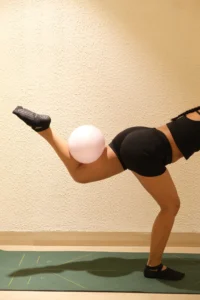
Pilates is a movement-based exercise method that focuses on core strength, controlled movement, breathing, alignment, flexibility and body awareness. When incorporated appropriately into an athlete’s weekly training routine, it can complement traditional strength training, sports practice and conditioning exercises.
But how often should athletes practise Pilates? Should it be performed before or after sports training? Can Reformer Pilates support athletic performance? And how can athletes include it without overtraining?
Let’s explore how to build a balanced weekly training routine that combines Pilates with regular sports activities.
What Is Pilates, and Why Are Athletes Including It in Their Training?
Pilates is a structured exercise method that develops strength, flexibility, coordination and movement control. Unlike conventional workouts that may focus primarily on lifting heavier weights or increasing exercise intensity, Pilates emphasises performing movements with precision, stability and control.
For athletes, these qualities are particularly relevant.
Consider a footballer changing direction during a match, a cricketer rotating their torso while batting, or a runner maintaining stable posture over long distances. Each activity requires coordinated movement, strength and control across different parts of the body.
Pilates for sports performance focuses on developing some of the physical qualities that support these movements.
Here are some reasons athletes are exploring Pilates:
- Core stability: Develops awareness and control of the muscles that support the trunk and pelvis.
- Flexibility: Uses controlled movements to work through different ranges of motion.
- Mobility: Encourages controlled movement around the hips, shoulders and spine.
- Balance and coordination: Challenges the body to maintain stability during different exercises.
- Postural awareness: Helps athletes understand their alignment and movement patterns.
- Breathing and concentration: Encourages coordinated breathing and focused movement.
Pilates should not replace sport-specific practice, strength and conditioning or cardiovascular training. Instead, it can serve as complementary physical conditioning.
7 Benefits of Including Pilates in an Athlete’s Weekly Training Routine
Understanding the potential benefits of Pilates can help athletes decide how to include it in their existing workout schedules.
1. Develops Core Strength and Stability
Core strength is essential in almost every sport. The muscles surrounding the abdomen, back and pelvis help stabilise the trunk during movements such as running, jumping, lifting, throwing and changing direction.
A strong and well-coordinated core can help athletes maintain better control during physical activity.
Pilates exercises such as the Hundred, Dead Bug variations, Plank variations and controlled leg movements challenge the abdominal and trunk muscles while encouraging proper alignment.
For example:
- Footballers need trunk stability while accelerating and changing direction.
- Cricketers use core control during batting, bowling and throwing.
- Runners rely on trunk stability to maintain posture during repetitive movement.
- Tennis players require coordinated trunk movement during powerful strokes.
Including Pilates-based core exercises in a weekly training programme can complement conventional strength exercises and help athletes develop better movement awareness.
2. Supports Flexibility and Range of Motion
Flexibility is an important component of athletic conditioning. Restricted movement around the hips, shoulders, ankles or spine may affect how comfortably an athlete performs certain movements.
Pilates uses controlled movements and stretching techniques to encourage flexibility without relying entirely on passive stretching.
For example, exercises involving spinal articulation, hip mobility and controlled leg movements can help athletes explore their available range of motion.
This may be particularly useful for:
- Runners who want to work on hip and hamstring flexibility.
- Swimmers who require comfortable shoulder movement.
- Footballers who perform repeated kicking and directional movements.
- Badminton players who regularly reach, lunge and change direction.
However, flexibility requirements differ between sports. The objective should be to develop useful, controlled mobility rather than simply becoming more flexible.
3. Improves Balance and Body Control
Balance is not limited to standing on one leg. It involves maintaining control while the body moves, changes direction or responds to external forces.
Athletes use balance continuously, whether they are landing after a jump, moving across a playing surface or maintaining stability during a single-leg movement.
Pilates includes exercises that challenge coordination, body positioning and stability.
Examples include:
- Single-leg balance exercises.
- Controlled leg extensions.
- Side-lying leg movements.
- Plank variations.
- Standing balance exercises.
These movements can complement the balance and coordination demands of sports such as football, cricket, tennis, badminton and basketball.
4. Encourages Better Movement Awareness and Coordination
Athletic movements are rarely isolated. They involve several muscle groups working together in a coordinated manner.
For example, throwing a ball involves the legs, hips, trunk, shoulders and arms working in sequence.
Pilates places considerable emphasis on movement precision and awareness. Athletes are encouraged to understand how their bodies move, maintain control and coordinate breathing with movement.
This awareness can complement technical sports training, where efficient movement patterns are important.
Rather than focusing only on completing more repetitions, Pilates encourages athletes to pay attention to how each movement is performed.
5. Supports Mobility During Intense Training Periods
Athletes often repeat similar movements throughout their training schedules. Runners perform repetitive strides, swimmers repeat shoulder movements, and cricketers practise batting or bowling techniques.
Over time, training programmes may leave certain movement patterns underemphasised.
Pilates can introduce controlled movements that complement these repetitive activities.
For example, a runner might include hip mobility and spinal movement exercises, while a swimmer might focus on comfortable shoulder movement and trunk control.
The purpose is not to diagnose or correct every muscular imbalance through Pilates. Rather, it is to provide additional movement variety and develop physical awareness.
6. Provides a Low-Impact Conditioning Option
Not every training session needs to involve sprinting, jumping, heavy lifting or high-intensity exercise.
Pilates offers a different approach to physical conditioning through controlled movements and adjustable resistance.
This makes it an option for athletes who want to include additional movement work without adding another high-intensity session.
Mat Pilates uses bodyweight and gravity, while Reformer Pilates uses spring-based resistance and a moving carriage.
The intensity of both formats depends on exercise selection, resistance, repetitions and individual ability.
A qualified instructor can adapt the session according to an athlete’s training experience, physical condition and current workload.
7. Encourages Focus and Mind-Body Connection
Athletic performance also involves concentration, discipline and awareness.
Pilates encourages participants to coordinate breathing, movement and posture. This requires attention to detail and helps athletes become more conscious of how they perform each exercise.
For individuals who spend much of their week training at high intensity, a controlled Pilates session can offer a different training experience.
It is not a replacement for adequate sleep, nutrition or recovery. However, mindful movement can be a useful part of a balanced exercise routine.
How Often Should Athletes Do Pilates?
One of the most common questions athletes ask is how many Pilates sessions they should include in a week.
The answer depends on their sport, current training volume, fitness level, competition schedule and recovery needs.
For many athletes, starting with one or two Pilates sessions per week can be a practical approach.
Beginners may start with one supervised session and gradually increase the frequency if their bodies respond well.
Athletes who already have demanding training schedules should avoid adding sessions simply to increase workout volume. Pilates should complement their existing programme rather than create unnecessary fatigue.
A few considerations include:
- Beginners should prioritise learning proper movement technique.
- Experienced athletes can explore more challenging exercises under appropriate supervision.
- Athletes preparing for competitions should coordinate Pilates sessions with their coaches.
- Individuals experiencing pain or recovering from an injury should seek guidance from an appropriate healthcare professional.
Consistency, exercise quality and recovery are more important than following a fixed number of sessions.
A Sample Weekly Training Schedule: How to Combine Pilates and Sports Training
Athletes often wonder how to fit Pilates into a busy weekly routine without affecting their regular sports practice.
The following example demonstrates how Pilates can complement a general athletic training schedule.
This is an illustrative routine, not a universal prescription. Training intensity and session duration should be adjusted according to the athlete’s sport, competition calendar and recovery capacity.
| Day | Training activity | Main focus |
|---|---|---|
| Monday | Sports-specific practice | Technical skills and conditioning |
| Tuesday | Pilates session | Core stability, mobility and control |
| Wednesday | Strength training | Muscular strength and conditioning |
| Thursday | Sports-specific practice | Speed, agility and coordination |
| Friday | Reformer Pilates | Controlled strength and flexibility |
| Saturday | Sports practice or competition | Sport-specific performance |
| Sunday | Rest or gentle movement | Recovery |
Monday: Focus on Sports-Specific Training
Begin the week with your regular sports practice.
Footballers may work on ball control, passing and agility, while runners may focus on running technique and planned conditioning.
The purpose is to prioritise the movements and skills directly related to your sport.
Tuesday: Include a Pilates Session
Use this day to introduce Pilates exercises focusing on core stability, controlled movement and mobility.
A supervised session may include:
- Pelvic tilts.
- Dead Bug variations.
- Bird Dog variations.
- Glute bridges.
- Spine mobility exercises.
- Controlled leg movements.
The intensity should be appropriate for your overall workload.
Wednesday: Strength and Conditioning
Continue with your regular strength training programme.
Depending on your sport, this may include resistance exercises for the upper body, lower body and trunk.
Pilates should not replace the progressive strength work required for athletic development.
Thursday: Return to Sports Practice
Focus on sport-specific movement, coordination, speed and technical skills.
For example, badminton players may practise footwork and court movement, while cricketers may work on batting, bowling or fielding.
Friday: Reformer Pilates Session
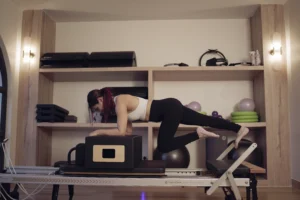
A Reformer Pilates session can introduce adjustable spring resistance and controlled movement challenges.
Exercises may focus on:
- Trunk stability.
- Hip and leg strength.
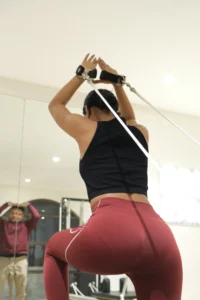
- Shoulder control.
- Movement coordination.
- Controlled flexibility.
A trained instructor can adapt the exercises to your ability and training objectives.
Saturday: Sports Practice or Competition
Prioritise your regular sports activity.
If you have a match or competition, avoid adding unnecessary exercise intensity. Your body should be prepared for the demands of the event.
Sunday: Rest and Recovery
Recovery is an essential part of athletic development.
Depending on your training load, this day may involve complete rest, gentle walking or comfortable mobility exercises.
Adequate sleep, hydration and nutrition should remain priorities.
Mat Pilates vs Reformer Pilates: Which Is Better for Athletes?
Athletes interested in Pilates often have another question: Should they choose Mat Pilates or Reformer Pilates?
Both methods can support movement control, strength and flexibility, but they use different approaches.
Mat Pilates
Mat Pilates primarily uses bodyweight, gravity and controlled movement.
It can help athletes work on:
- Core strength and stability.
- Postural awareness.
- Flexibility.
- Coordination.
- Bodyweight movement control.
Mat exercises can be adapted to different fitness levels, making them a useful starting point for beginners.
Reformer Pilates
Reformer Pilates uses specialised equipment with a moving carriage, adjustable springs, straps and other components.
The resistance can be modified to suit different exercises and ability levels.
Potential training focuses include:
- Controlled resistance-based movements.
- Core and trunk stability.
- Hip and leg conditioning.
- Shoulder and upper-body control.
- Movement coordination.
Which One Should Athletes Choose?
There is no single best option for every athlete.
Mat Pilates may suit individuals who want to develop foundational movement skills, while Reformer Pilates offers additional resistance and exercise variations.
The choice should depend on individual goals, training experience, physical needs and instructor guidance.
At Ritual Centre, athletes can explore guided Pilates sessions in a structured studio environment, including equipment-based training using Merrithew systems.
How Different Athletes Can Include Pilates in Their Training
Every sport places different demands on the body. Therefore, Pilates exercises should be selected according to the physical requirements of each activity.
Pilates for Football Players
Football requires acceleration, deceleration, balance, agility and repeated changes of direction.
Footballers can explore Pilates exercises focusing on:
- Core stability.
- Hip mobility.
- Single-leg control.
- Trunk coordination.
- Controlled lower-body movements.
These exercises can complement football-specific strength and conditioning.
Pilates for Cricketers
Cricket involves a combination of rotational movement, throwing, running and sustained physical effort.
Cricketers may benefit from Pilates sessions that emphasise:
- Trunk stability.
- Thoracic mobility.
- Shoulder movement.
- Hip flexibility.
- Coordinated movement.
The exercises should complement the demands of batting, bowling and fielding rather than replace technical practice.
Pilates for Runners
Running involves repetitive loading and coordinated movement across the lower body and trunk.
Runners can include Pilates to work on:
- Core endurance.
- Hip strength.
- Pelvic control.
- Ankle and hip mobility.
- Single-leg stability.
A Pilates session can provide movement variety alongside running mileage and strength training.
Pilates for Tennis and Badminton Players
Racket sports involve rapid directional changes, lunges, reaching and rotational movements.
Pilates exercises focusing on balance, trunk control, shoulder mobility and hip movement can complement regular court training.
Pilates for Swimmers
Swimming requires coordinated movement, trunk control and repeated shoulder activity.
Swimmers may include Pilates exercises that focus on:
- Trunk stability.
- Shoulder mobility.
- Thoracic movement.
- Breathing awareness.
- Postural control.
Exercise selection should account for existing swimming volume and shoulder comfort.
Common Mistakes Athletes Should Avoid When Adding Pilates
Although Pilates can be a useful part of athletic conditioning, how it is introduced matters.
Here are some common mistakes to avoid.
1. Treating Pilates as a replacement for strength training
Pilates can complement strength training, but athletes still need appropriate resistance-based exercises to develop sport-specific strength and power.
2. Doing too much too soon
Adding several Pilates sessions to an already demanding training schedule may increase fatigue. Start gradually and monitor your response.
3. Ignoring proper technique
Controlled movement is central to Pilates. Performing exercises quickly without understanding alignment can reduce their intended training value.
4. Following exercises without considering your sport
A footballer, swimmer and marathon runner have different physical requirements. Exercise selection should reflect those differences.
5. Ignoring recovery
Training adaptations depend on an appropriate balance between exercise and recovery. More training is not automatically better.
6. Expecting immediate performance improvements
Pilates is a training method, not an instant performance solution. Improvements depend on consistency, exercise quality and how the sessions fit into the wider training programme.
How to Choose the Right Pilates Programme for Your Athletic Goals
Before starting Pilates, consider what you want to achieve.
Are you looking to develop better core control? Do you want to work on mobility? Are you interested in improving movement awareness or adding a complementary conditioning session?
Understanding your objectives can help you select an appropriate programme.
Consider these factors:
Your sport: Identify the physical demands of your sport and the areas you want to work on.
Your training experience: Beginners may need more foundational exercises, while experienced athletes may be ready for more challenging movements.
Your current workload: Consider sports practice, gym sessions, competitions and recovery days before adding Pilates.
Instructor guidance: Choose a studio that provides structured instruction and can adapt exercises to individual needs.
Progress monitoring: Evaluate your movement control, comfort, consistency and ability to manage your training workload over time.
At Ritual Centre, Pilates sessions are designed around guided movement, strength, flexibility and mindful exercise. The studio offers group, duet and personal training formats, allowing individuals to explore different approaches to their Pilates practice.
For athletes who want to complement their existing training with structured movement sessions, an instructor-guided programme can be a useful starting point.
Why Athletes in Guwahati Can Explore Pilates at Ritual Centre
Athletes and sports enthusiasts in Guwahati are increasingly exploring different approaches to physical conditioning beyond conventional gym workouts.
Pilates offers an opportunity to focus on controlled movement, core stability, flexibility and body awareness as part of a wider fitness routine.
Located at Nikita Pinnacle, Khanapara, Ritual Centre provides a dedicated Pilates studio environment with Merrithew equipment and guided training options.
Whether you are a runner, footballer, cricketer, swimmer or fitness enthusiast, your Pilates programme should reflect your individual goals and existing training commitments.
Ritual Centre offers:
- Personal training: One-to-one sessions with individual attention.
- Duet sessions: Guided Pilates practice with a training partner.
- Group sessions: Structured movement in a small-group environment.
- Equipment-based Pilates: Training using Merrithew Pilates systems.
If you are considering adding Pilates to your weekly athletic training routine, start by discussing your goals and experience with an instructor.
Visit Ritual Centre to explore Pilates training in Guwahati.
Frequently Asked Questions About Pilates for Athletes
1. Is Pilates good for athletes?
Yes. Pilates can be a useful complementary training method for athletes because it focuses on core stability, flexibility, balance, coordination and controlled movement. It can be included alongside sport-specific practice and strength training.
2. How many times a week should athletes do Pilates?
Many athletes can start with one or two Pilates sessions per week. The ideal frequency depends on training intensity, fitness level, competition schedules and recovery requirements.
3. Can Pilates improve sports performance?
Pilates may support physical qualities such as balance, flexibility, movement control and core stability. These qualities can contribute to athletic conditioning, although improvements in overall sports performance depend on several factors, including sport-specific practice and strength training.
4. Is Reformer Pilates better than Mat Pilates for athletes?
Neither is universally better. Mat Pilates uses bodyweight and gravity, while Reformer Pilates incorporates adjustable spring resistance. Both can support strength, movement control and flexibility. The appropriate option depends on an athlete’s goals and experience.
5. Can football players benefit from Pilates?
Football players can use Pilates to complement training focused on core stability, hip mobility, balance and controlled movement. These physical qualities are relevant to running, changing direction and maintaining body control.
6. Should athletes do Pilates before or after sports training?
It depends on the session’s intensity and purpose. Gentle mobility-based exercises may be suitable during preparation, while a more demanding Pilates session can be scheduled separately or after an appropriate training session. Avoid fatiguing exercises immediately before important competitions.
7. Can runners include Pilates in their weekly training routine?
Yes. Runners can include Pilates as complementary conditioning to work on core stability, hip strength, mobility and single-leg control. It should be scheduled around running volume and recovery needs.
8. Does Pilates help improve flexibility in athletes?
Pilates includes controlled movements and stretching exercises that can support flexibility and movement through different ranges of motion. Results depend on consistency, exercise selection and individual physical needs.
9. Can athletes do Pilates and gym workouts together?
Yes. Pilates and gym training can be complementary. Gym workouts can focus on progressive resistance and strength development, while Pilates can provide additional work on movement control, stability, flexibility and coordination.
10. Is Pilates suitable for professional and beginner athletes?
Pilates can be adapted for different experience levels. Beginners can start with foundational movements, while experienced athletes may explore more challenging exercises under qualified instruction.
11. Can Pilates replace an athlete’s regular workout?
No. Pilates should generally complement an athlete’s existing programme rather than replace sport-specific practice, cardiovascular conditioning or appropriate strength training.
12. Where can athletes practise Pilates in Guwahati?
Athletes and fitness enthusiasts can explore guided Pilates sessions at Ritual Centre, located at Nikita Pinnacle, Khanapara, Guwahati. The studio offers group, duet and personal training options.
Final Thoughts: Make Pilates Part of a Balanced Athletic Training Routine
Athletic development is about more than training harder. It is also about developing better movement habits, maintaining physical conditioning and understanding what your body needs.
Pilates provides an additional way to work on core stability, flexibility, mobility, balance and movement control. When combined thoughtfully with sports practice, strength training and adequate recovery, it can become a valuable part of an athlete’s weekly routine.
Whether you play football, cricket, tennis, badminton or enjoy long-distance running, consider how controlled movement and structured Pilates sessions could complement your existing training.
Build strength with control. Move with awareness. Make every training session count.
Explore guided Pilates sessions at Ritual Centre, Guwahati, and discover a more mindful approach to movement and physical conditioning.